10 Aug King’s Cross: From Red-Light District to AI Innovation Hub
The Transformation of King’s Cross: From Red-Light District to AI Hub
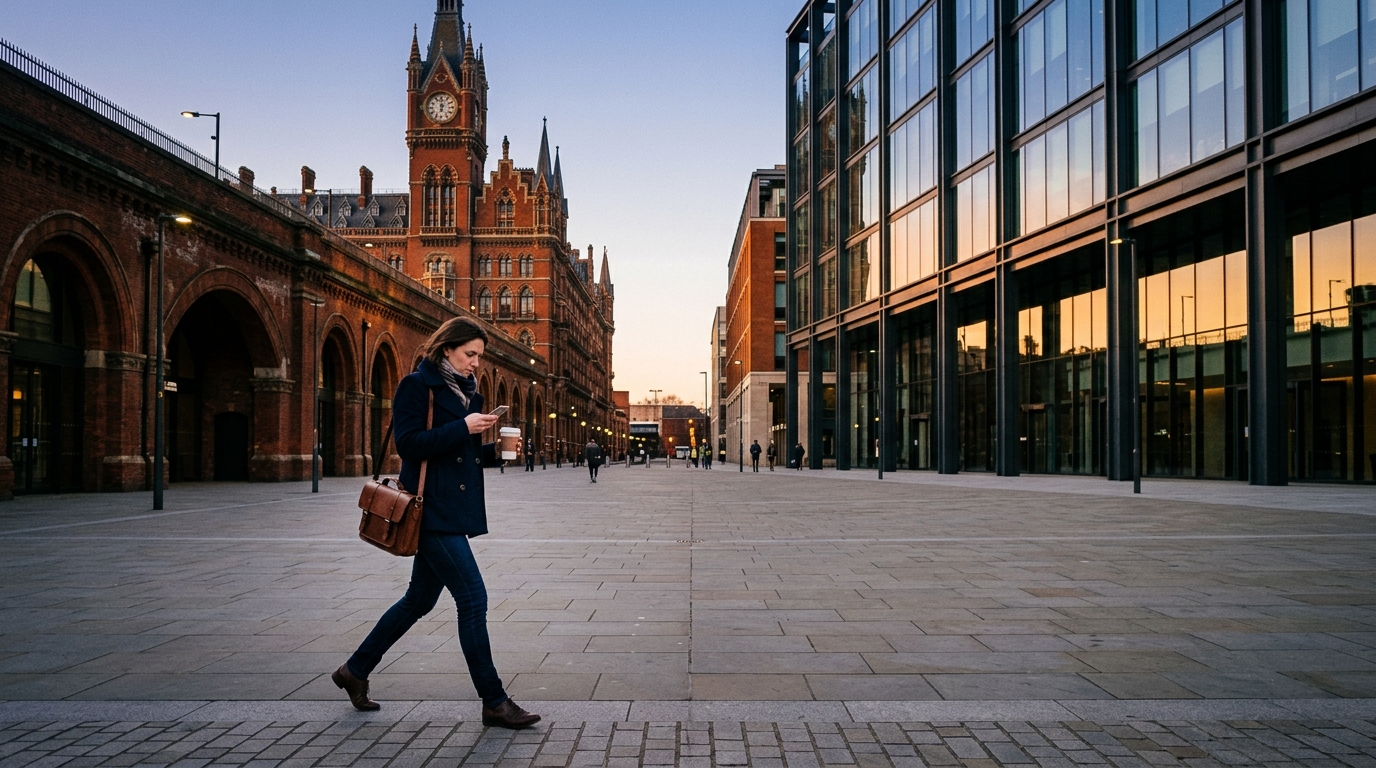
King’s Cross—once notorious for its gritty reputation—has experienced a stunning metamorphosis. It’s now ranked among the world’s foremost AI hubs. This drastic change kicked off in 2016 when Google DeepMind relocated to the area, igniting a technology explosion that lured numerous AI startups. Nowadays, the district is a hive of innovation, hosting heavyweights like OpenAI, Meta, and Isomorphic Labs.
Dealroom data reveals that AI startups in London have snapped up $12.1 billion since late July, forming a substantial chunk of the $14.8 billion amassed in the city. Now, with over 3,600 AI startups setting up shop in London, the clamor for office space in King’s Cross has skyrocketed. Unsurprisingly, prime rents have soared by 18% over the past three years, fueled by hefty leases from giants like OpenAI.
“We stop at nothing to win deals [for] and to support founders, including helping them source office space when needed.” — Anonymous VC firm
AI Detectors and the Growing Culture of Distrust
Yet, the rise of AI isn’t without its ripples of distrust, especially in schools. AI detectors—tools crafted to sniff out AI-generated content—are becoming commonplace to combat plagiarism. But these tools sometimes falter, erroneously marking human-authored works as AI creations, landing students and professionals in hot water.
Despite assurances of low false positive rates from Turnitin and Pangram, the subjective nature of these detectors means mistakes happen. The fallout from these errors can be severe, as high-profile instances have shown, with authors and students facing harsh consequences based on these AI detector results.
“AI detectors use an algorithm to analyze a text’s wording, rhythm, and structure, as well as to pick up on patterns in length and tone that may be more common in AI-written text.” — GPTZero
AI’s Environmental Impact: The Case of Amazon’s Data Center
As AI forges ahead, its environmental toll is a mounting concern. Enter Amazon’s new data center in Pecos County, Texas. The facility, coupled with a power plant allowed to emit up to 33 million tons of CO2, underscores the environmental hurdles of powering AI infrastructure.
This trend of tech behemoths investing in their power plants—often dependent on fossil fuels—is growing. Although Amazon has vowed to hit carbon neutrality by 2040, AI’s spiraling demands make this goal seem increasingly distant. The company is now seeking out alternative energy solutions, such as solar power and battery storage, to lessen their environmental footprint.
“Our new planned data center campus in Pecos County is designed to transition to grid-connected service as interconnection timelines allow.” — Amazon spokesperson
Looking Forward: Balancing Innovation and Responsibility
AI’s rapid expansion offers thrilling potential but also poses hefty challenges. As thriving tech locales like King’s Cross continue to flourish, the sector needs to grapple with trust issues, environmental impact, and ethical tech use. Striking a balance between innovation and responsibility is vital as AI integrates deeper into our lives.
No Comments